Monday, November 7, 2011

Post #7: Recommendation


Eternal Knight

For a first novel, Eternal Knight was very well written and organized. Everything from the map of Landomere and Salador – the lands that the main character, Hadde, traveled through during the course of the story – on the first page to the reflections in the epilogue was detailed and planned carefully. The characters were mostly believable and the underlying message was pretty powerful: that the notions of good and evil are subjective and that villains often see themselves as heroes in their own eyes.

Whenever I thought that I knew where the story was headed, the author really surprised me with plot twists or major changes. I also liked how Mr. Heppe brought back details from earlier chapters and incorporated them later in the book -- something that well-established writers like JK Rowling really master in their works as well.

The one thing that I did not like was the occasional anachronistic dialogue – like using modern phrases or terms that did not seem to suit the fantasy setting.

Overall, I would definitely recommend Eternal Knight to people who like reading fantasy.  However, it is definitely not a prerequisite. I never really read any books in the deep fantasy genre prior to reading Eternal Knight, but still enjoyed reading it. It was a little confusing in the beginning since the story starts right off into the action with new terminology and unfamiliar character names. However, it becomes easier to read as the author builds up the background of characters as the plot unfolds. It had none of the usual fantasy creatures like elves or dwarves, but it had a fantasy setting and magical aspects woven into the story line. Overall, I would give Eternal Knight a 4/5 stars.

Friday, November 4, 2011

Post #7: Accuracy of Predictions

Prompt: #7 Write about your predictions from Prompt #6. Were they correct? Why or why not?
Eternal Knight: (Chapters 19-Epilogue)
*spoiler alert*
There were a lot of plot twists in the last few chapters of the book that really surprised me and altered the entire storyline. I guessed at possible plot developments earlier -- like Earl Waltas' revenge and Prince Morin's ambition -- but the way the author wrote it made the story unpredictable right up the last page. I correctly predicted that Earl Waltas' frequent reappearances at Salador would develop into a larger conflict as he tried to take revenge on Hadde for ruining him. However, I didn't expect him to attack Hadde's maiden in waiting, Maret, in the way he did. Hadde killed Waltas, forcing her to leave Sal-Oras and ultimately swaying her to join Morin and Astor in search of the "Orb of Creation." I think the most shocking turn of events was introducing the character of Akinos as an old man. From the very first page of the novel, the word "akinos" had represented the greatest insult or term for evil. However, as Mr. Heppe convinces the reader by the end of the nearly 300-page book, in many cases, good and evil depend on which side you're looking from. Everyone expected Akinos to be a horrible, brutal monster like how most villains are portrayed. However, it is both tragic and infuriating that Akinos truly believed himself to be the savior of the world. He had good intentions at heart, but they were thwarted by the corruption and greed of other characters -- namely Prince Morin. I knew his character was overly ambitious and power-driven, but it surprised me how Morin turned out to be even worse than I expected. The rumors of him being a traitor and having challenged his brother for the throne years ago rings true by the end of the novel. The fact that Morin tricked Hadde into slaying Akinos and getting his own brother, Boradin, killed to clear his path to the throne and to the Orb, for his own gain, is sickening. What is really the saddest part of the novel is that Akinos did nothing purposely wrong or evil; he acted out of good intentions and was willing to sacrifice his life to save everyone -- something Morin the moron utilized and exploited. Like Mr. Heppe commented in his acknowledgements, the deeper message of Eternal Knight really seemed to be "bad guys see good guys when they look in the mirror."

Thursday, November 3, 2011

Post #5: Predictions

Prompt #6: Make some predictions about what you think will happen in future chapters. What support can you find?
Eternal Knight (Chapters 9-18)
*spoiler alert* Hadde goes to Sal-Oras, the capitol of Salador, where she finally meets the king, Boradin, and the over six-hundred-year-old Spiridus ambassador from her land, Orlos. Since Boradin is a famous elementar who is able to control forces of nature like fire and wind, Hadde asks him for help to end The Wasting. However, he tells her that he cannot even help his own kingdom from its destruction and famine. "'Elemental magic has no bearing on the Wasting. I cannot call fire and burn it away. I cannot call the wind to blow it away. The Wasting is simply, death'" (Heppe 96). He is convinced, however, that the Orb Hadde found in the middle of the Great Forest was a sign from the land of Landomere and that Hadde will be able to help him. He tells her that a "Orb of Creation" must be recovered in order to end The Wasting. He says that the clues of the Orb's whereabouts "are in the Ancient Texts. In their prophecies" (Heppe 98). Later, as Hadde becomes adjusted to palace life at Sal-Oras, the ancient Orlos reveals that he discovered part of the prophecy, that the "offspring of the archer will slay the sun" (Heppe 154). He didn't tell Boradin yet, since the quote could be translated and interpreted as the offspring of the archer will kill the king of Salador. Hadde earned a reputation for being an excellent archer, so this would easily point towards her. I think that if Boradin finds out the second half of the prophecy, he might try to detain Hadde. The offspring of the archer could mean Hadde, since her father was an archer before her, or, it could mean Hadde's children if she has any in the future. Hadde also developed a relationship with Prince Morin, the king's half-brother, who is also an elementar. There are rumors of him being a traitor and having challenged his brother for the throne years ago. Judging by his actions and the comments from Queen Ilana, I think that Morin will turn out to be an untrustworthy character. Also, Earl Waltas keeps on reappearing in the chapters, which will probably develop into a larger conflict as he tries to take revenge on Hadde for ruining his status and position.

Wednesday, November 2, 2011

Post #4: Illustrating The Chapter Through A Picture

Prompt 15: Illustrate through a picture or a symbol, an idea scene, or some part of a chapter or the book. Explain your choice.

Grapes of Wrath: (Chapters 6-7)

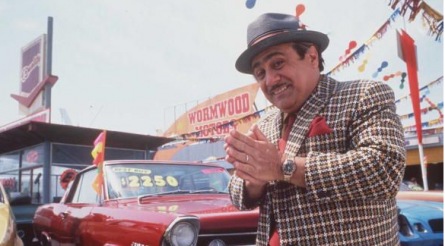
In Chapter 6, Joad reaches his family's homestead but finds that it (along with all the neighboring farms) has been deserted. The only neighbor left is Muley Graves, who tells them that his family moved out to stay with their uncle, in hopes of earning enough money to buy a car and move to California. Chapter 7 on the other hand was told from the point of view of a crooked salesman telling his employees how to make the most profit by swindling people into buying broken down cars. Throughout the chapter, the salesman announces: "Good cars. Good Used Cars!" to the customers but laughs with his employees afterward (Steinbeck 83). Knowing that many families have been forced off their homesteads and are desperately trying to go out west to California, the car dealers hike up the prices and lie about the quality of the used cars. The salesmen fill engines with sawdust and replace good car parts with broken ones. This reminded me of Mr. Wormwood (who was also a shady used-car salesman) from the book Matilda by Roald Dahl, so I chose a picture of Mr. Wormwood rubbing his hands together from the Matilda movie to illustrate this chapter.

Eternal Knight: (Chapters 6-8)

After traveling for days, Hadde and Belor finally reach a Saladoran manor. However, the village there is also greatly weakened by The Wasting. The lord of the manor abandoned the village a year ago and the yeomen there act strangely. They try to break into Hadde and Belor's cottage in the middle of the night and attack them, forcing Hadde and Belor to fight back. Belor is shot and mortally wounded, leaving Hadde alone. Hadde hides at an abandoned Saladoran fort and later saves a group of Saladoran nobles -- Earl Waltas, Sir Nidon, and Squire Melas -- from a band of Kiremi warriors. Earl Waltas looks down upon Hadde as a foreigner and continually insults her even though she saved their lives. Waltas laughs when Sir Nidon names Hadde an ambassador after she shows him the Orb and requests to see the Saladoran king. After Hadde hunts a turkey on a Saladoran noble’s (Earl Crane’s) territory, Waltas argues with Nidon that Hadde should be punished for breaking Saladoran law as a poacher. Squire Melas was afraid of approaching Waltas, commenting to Hadde, “‘He’s an earl. I’m only a squire’” (Heppe 75). Because Earl Waltas is of higher rank and social status (Earl > Knight > Squire) by Saladoran law, he cannot be charged by someone of a lower rank. I chose a picture of a squire helping a knight and running errands to illustrate this part of the book because of the strict hierarchical system and emphasis on rank.

Tuesday, November 1, 2011

Post #3: Connections

Prompt 10: Write about connections that you made while reading the chapter/book. How does something remind you of your experiences or people you know or have known?

Grapes of Wrath: (Chapters 4-5)
Tom Joad sort of reminds me of Chris McCandless from Into the Wild. Both of these main characters are introduced as hitchhikers and get a ride to the middle of nowhere from truck drivers. In each book, the truck driver offers the character a lift and attempts to learn more about them by asking prying questions. Joad and McCandless deflect most of their questions and reveal very little about themselves until the end of their trip. In chapter 4, Joad tells Jim Casy, his old preacher, that he killed a man in a drunken brawl. This reminded me of the main character from the movie, Conair, who was sentenced to prison for several years after accidentally killing someone while he was drunk. However, the difference is that the character in Conair was fighting in self-defense of his wife instead of intending to attack. Joad comments that some of his cellmates on parole felt insecure after spending so many years in prison and became adjusted to prison life, where the conveniences of lighting and regular meals were provided. "He says it makes him feel lonesome out there in the open havin' to think wha to do next. So he stole a car an' come back" (Steinbeck 36). Some of the convicts in Conair expressed similar sentiments. In Chapter 5, Steinbeck describes the general pattern of landowners and banks evicting tenant families off of their farmland because profits aren't high enough. The whole tenant system reminded me of Roll of Thunder Hear My Cry by Mildred D. Taylor. In both stories, the tenant family is being threatened of eviction. A single tractor replacing the work of families described in chapter 5 also reminded me of a discussion in New Ideas From Dead Economics by Todd G. Buchholz about the repercussions of technological advances (such as a photocopier replacing 1000 scribes) --the cost of efficiency is putting many people out of work.

Eternal Knight: (Chapters 3-5)
 In Chapter 3, a beautiful stag leads Hadde to a magical golden chain in the middle of the Great Forest. Unlike the other animals who were weak from The Wasting, the stag seemed to have a magical essence. "It wasn't just any stag, but a magnificent beast. Tall, well muscled with a lustrous coat. She couldn't believe it was real...The stag knew her--" (Heppe 15). This description really reminded me of the silver doe Patronus Harry follows in Harry Potter and the Deathly Hallows. (In the Harry Potter world, a patronus is a magical form of an animal that a wizard can conjure.) Like Hadde, Harry followed a magical creature to a clearing the forest where a locket was placed -- in Harry's case, Slytherin's locket, a Horcrux; in Hadde's case, a "wavy-rayed Orb" (Heppe 19). Hadde discovers that it is the sun-symbol (depicted on the cover) of Helna and that the chain is made out of gold, which is incredibly rare and valuable. Since Saladorians were believed to place a very high value on precious metals, Hadde decides to go to Sal-Oras in hopes of selling the chain there for supplies. There is a lot of debate over whether the orb should be sold at all since the sun-symbol is considered to be a relic. However, Hadde makes the argument that it is necessary to save her people from starvation. This reminds me Fantine from Les Miserables, who was desperately willing to sell everything she had in order to help her daughter.